
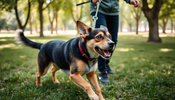
Why does my dog pull on the leash? Causes, mistakes and solutions
, by Fidello, 5 min reading time
, by Fidello, 5 min reading time
As a dog owner, you probably recognize this situation: your dog keeps pulling on the leash during walks. This is a very common behavioral issue that many dog owners struggle with, regardless of breed or age. Leash pulling can make walks stressful and even physically uncomfortable for both dog and owner. But why do dogs do this in the first place? And how can you teach your dog to walk calmly on leash using the right training approach and suitable equipment, such as properly chosen leashes, collars, or harnesses? In this blog, we explain the causes, common mistakes, and effective solutions.
Dogs pull on the leash for different reasons. Sometimes it’s natural behavior, such as exploring their environment using their highly developed sense of smell. In other cases, it is learned behavior that has been unintentionally reinforced because the dog still reaches its goal while pulling. This means that, as an owner, you have real influence over this behavior. The difference between a puppy and an adult dog is important here.
A young puppy is more likely to pull because it is still discovering the world and has limited impulse control. At that stage, the natural urge to explore is stronger than the ability to walk calmly at your side. As a dog matures and receives consistent training, this pulling behavior should gradually decrease.
There are several reasons why dogs pull on the leash. The most common causes include:
Dogs are easily distracted by environmental stimuli such as sounds, scents, movement, and other animals. During walks, a lot of information comes in at once. The more there is to see and smell, the stronger the urge to move forward. A well-chosen leash setup and a structured walking routine can help manage this overstimulation.
If a dog has not been properly trained to walk politely on leash, or if rules are applied inconsistently, the dog will quickly begin testing boundaries. Allowing pulling one day and correcting it the next creates confusion. Consistent training combined with clear expectations is essential.
Not every walking tool is suitable for every dog. A poorly fitted harness, an unsuitable collar, or an inappropriate leash can actually encourage pulling. A traditional collar may place pressure on the neck, while properly designed anti-pull tools can support better biomechanics. In some situations, a headcollar like the Gentle Leader can help improve focus, while a front-attachment harness such as the PetSafe Easy Walk anti-pull harness reduces pulling by redirecting force across the chest.
Dogs need sufficient daily exercise and mental enrichment. When a dog is under-stimulated, it may start pulling during walks in an attempt to seek additional stimulation. Varying walking routes and incorporating attention-based exercises can help reduce this behavior.
In addition to causes related to the dog itself, many owners unknowingly make mistakes that reinforce pulling behavior:
By continuing forward while your dog is pulling, you unintentionally reward the behavior. The dog learns that pulling works to get where it wants to go.
A leash that is too long allows the dog to build momentum and pull more easily, while a leash that is too short can create tension and frustration. Choosing the right length within the leashes category plays an important role in controlled walking.
Correcting a dog without clear timing or guidance often leads to confusion. The dog does not understand which behavior is expected, which can make the problem worse rather than better.
Sometimes pulling is rewarded without the owner realizing it—for example, by allowing the dog to pull toward an interesting place or by offering a treat to regain attention while the dog is still pulling.
Teaching a dog to walk calmly on leash requires patience, consistency, and the right combination of training and equipment. Key steps include:
Start by training calm behavior and attention so your dog learns to walk at your pace and respond to your body language and cues.
As soon as your dog walks calmly next to you, reward the behavior immediately. This helps your dog understand that relaxed walking is what you expect.
If your dog begins to pull, calmly change direction. This teaches the dog that pulling does not lead to the desired outcome.
Treat every walk as a training opportunity. With consistent practice, polite leash walking becomes part of your dog’s routine.
In addition to training, the right tools can support the learning process:
A well-fitted harness distributes pressure across the chest and shoulders and is often more comfortable than a collar. In the harnesses category, you’ll find options that support positive training methods.
Training leashes allow your dog more freedom to explore while still giving you control, which is especially useful for focus and attention exercises.
Tools can support training, but they are not a replacement for it. They work best when used correctly and combined with clear, consistent guidance.
If leash pulling continues or becomes worse despite consistent training, professional guidance may be helpful. This is especially recommended in cases of:
A professional dog trainer or behavior specialist can help identify the underlying cause and develop a tailored training plan.
Leash pulling is a common issue in dogs, but it is very manageable. By understanding the causes, avoiding common mistakes, and combining proper training with suitable tools such as appropriate collars, harnesses, and anti-pull solutions, you can teach your dog to walk calmly at your side. With patience, consistency, and the right approach, every walk can become an enjoyable experience.


